Biometric Verification and Liveness Detection
Biometric verification compares a person’s face or other trait with a claimed identity, while liveness detection helps determine whether the sample comes from a present human rather than a spoof. The technology can reduce fraud, but its accuracy, fairness and privacy implications require careful controls.
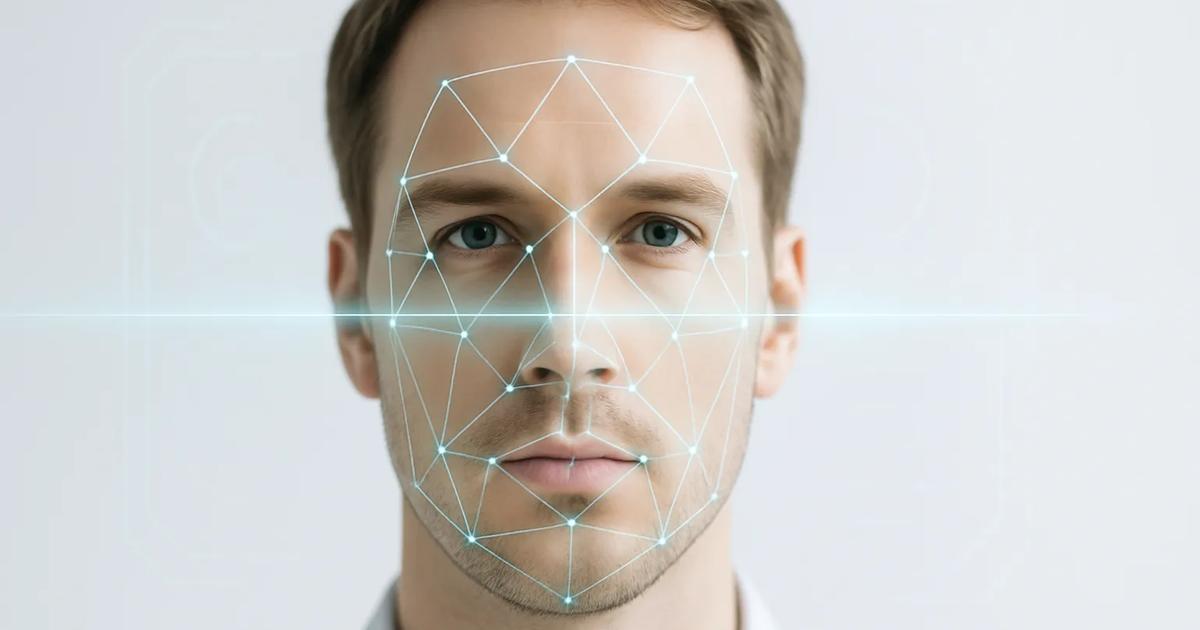
Biometric verification uses a measurable human characteristic, such as a face, fingerprint or voice, to confirm identity. In remote identity verification, a user commonly submits a selfie that is compared with the portrait on a government identity document or an enrolled reference image.
A face match alone is not enough. A fraudster may hold up a printed photograph, replay a video on a phone, or use a sophisticated mask. Liveness detection, also called presentation attack detection, is intended to assess whether the camera is seeing a real, present person rather than an artificial representation.
1:1 face matching versus 1:N recognition
Most identity verification services perform 1:1 face matching, sometimes called face verification. The user claims an identity, for example by presenting a passport or logging into an account, and the system compares their live selfie with one known image. The question is narrow: is this likely the same person?
1:N face recognition works differently. The system compares one face against a database containing many faces to identify a person or find possible candidates. Law enforcement searches of image repositories and some watchlist systems are examples. Because the search is not tied to a prior claim of identity, 1:N systems create broader risks of mistaken matches, surveillance and use beyond the original purpose.
The distinction matters for governance. A company using 1:1 matching to prevent account takeover should not imply that it can identify an unknown person, and a 1:N deployment generally warrants stronger legal authority, auditability and human review.
Active and passive liveness detection
Active liveness asks the user to do something during capture. Prompts may include turning their head, following an on-screen dot, blinking, smiling or reading digits. The system checks whether the response occurs in the expected way and time. These challenges can make simple photo and video replays harder, but add friction and can be difficult for some users with disabilities, limited dexterity or poor connectivity.
Passive liveness evaluates the image or video without asking the user to perform a specific challenge. It may assess texture, depth cues, reflections, motion patterns, camera artifacts and signals from multiple frames. Passive methods can produce a faster experience, but their effectiveness depends on the attack type, camera quality, lighting and the model’s training and testing.
Many vendors combine approaches. A workflow might passively inspect a selfie video while also asking for a brief head movement when risk signals are elevated. The right design depends on the fraud threat, acceptable abandonment rate and accessibility needs.
Presentation attacks and ISO/IEC 30107
A presentation attack is an attempt to fool a biometric capture system by presenting an artifact or manipulated biometric characteristic. Presentation attack detection, abbreviated PAD, is the technical discipline of detecting those attempts. It is more precise than the broad term “liveness,” which is often used in product marketing.
The ISO/IEC 30107 series is the principal international standard family for PAD. It defines terminology and testing concepts, including how to evaluate systems against presentation attack instruments, such as printed photos or masks. ISO/IEC 30107-3 addresses testing and reporting, including two important measures: attack presentation classification error rate, or APCER, and bona fide presentation classification error rate, or BPCER.
APCER measures how often attack presentations are incorrectly accepted. BPCER measures how often legitimate, bona fide users are incorrectly rejected. Neither figure is meaningful in isolation. Results depend on the specific attacks tested, the devices used, environmental conditions and the operating threshold. Independent testing against relevant attacks is more informative than a general claim that a product is “ISO compliant.”
Common spoof methods
- Printed photographs, including high-quality prints and images cut around the eyes or face.
- Screen replays, where a photo or prerecorded selfie video is displayed on a phone, tablet or monitor.
- Masks, ranging from simple paper masks to realistic silicone or resin face masks.
- Digital injection or deepfake attacks, where manipulated imagery is inserted into the camera feed rather than shown to a camera. These attacks may require separate controls beyond camera-based PAD.
Accuracy, bias and fairness
A biometric system makes tradeoffs between false accepts, where an impostor is accepted, and false rejects, where a legitimate user is denied. Tightening a threshold can reduce fraud but may increase legitimate failures. Performance should be measured separately for face matching, document checks and PAD, rather than represented as one overall accuracy number.
Error rates can differ across demographic groups and capture conditions. Skin tone, age, gender presentation, facial coverings, disability, lighting, camera hardware and network quality can all affect outcomes. A system that performs well on a benchmark may perform differently for an organization’s users or on lower-end mobile devices.
Fairness requires more than model testing. Organizations should evaluate subgroup performance where lawful and appropriate, test realistic environments, provide a meaningful fallback route, and monitor rejection and fraud outcomes after launch. Human review can help in edge cases, but reviewers also need training, clear escalation rules and quality controls.
Privacy and data governance
Biometric data is sensitive because a face or fingerprint is persistent and difficult to change after compromise. A facial template, meaning a mathematical representation used for comparison, is not the same as a photograph, but it can still be personal data and may enable linking across systems if handled poorly.
In the European Union, biometric data used to uniquely identify a person is generally a special category of personal data under the General Data Protection Regulation. Processing needs a valid legal basis, a condition for special-category data, clear purpose limits, security safeguards and data-minimization practices. High-risk uses may require a data protection impact assessment.
In the United States, rules vary by state and sector. Some state biometric privacy laws impose notice, consent, retention and deletion obligations, and litigation risk can be significant. Organizations should identify what they collect, explain why, avoid retaining raw captures longer than necessary, restrict secondary uses, secure templates and images, and give users accessible routes to challenge or complete verification when biometrics fail.