Ultimate Beneficial Owners: What a UBO Is and How to Identify One
An ultimate beneficial owner, or UBO, is the real person who ultimately owns or controls a business. Identifying UBOs is a core part of KYB due diligence, but layered companies, nominees and trusts can make the task difficult.
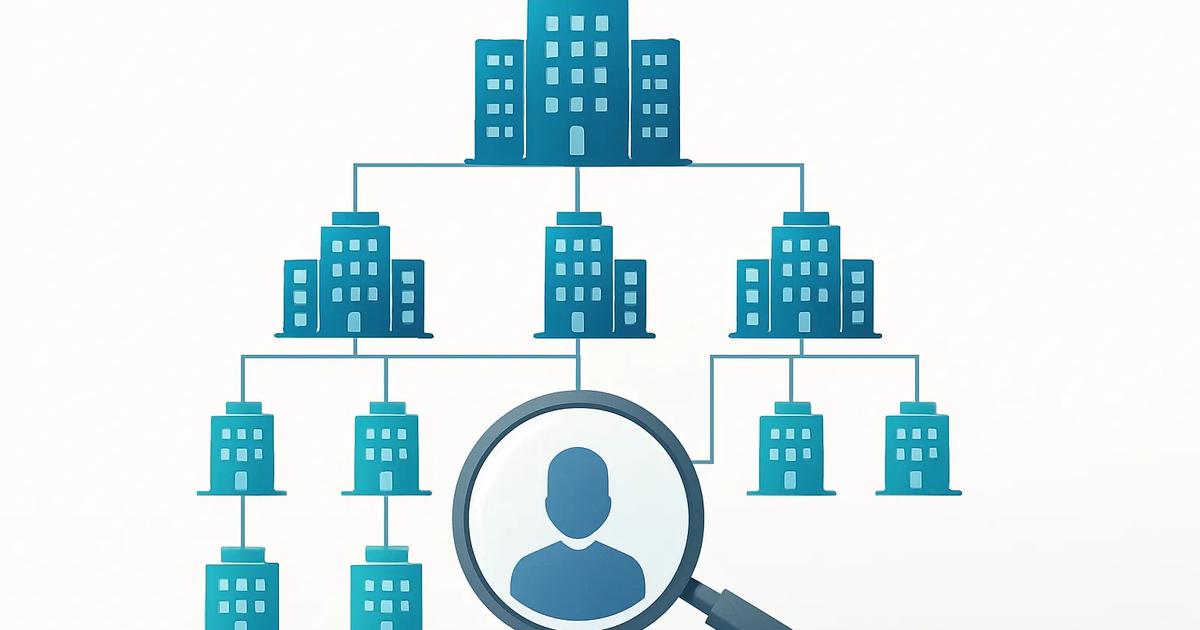
Ultimate beneficial owner, usually shortened to UBO, describes the natural person who ultimately owns or controls a company. The term is central to business onboarding, anti-money laundering compliance and know-your-business, or KYB, checks.
A company may be owned on paper by other companies, partnerships or trusts. Those entities can be legitimate parts of a corporate structure, but they are not the final answer for due diligence. A UBO investigation follows ownership and control through those intervening entities until it identifies the real people at the end of the chain.
What is an ultimate beneficial owner?
A UBO is a living individual with ultimate ownership or effective control over a legal entity. “Beneficial” distinguishes that person from the legal owner shown in a company register or share ledger. For example, a US operating company might be owned by a Delaware holding company, which is owned by a Luxembourg company. If an individual owns the Luxembourg company, that individual may be the operating company’s UBO.
The definition matters because financial crime risks often arise when people use companies to obscure who receives value, directs decisions or moves funds. Banks, payment firms and other regulated businesses generally need to know who is behind a customer business before and during the relationship.
Ownership and control thresholds
Many anti-money laundering regimes use a 25 percent ownership benchmark. It is a practical threshold, not a universal definition of control. Ownership can be calculated through direct shares or indirect interests held through other entities. If a person owns 60 percent of a parent company that owns 50 percent of a subsidiary, the person has a 30 percent indirect interest in the subsidiary.
- In the United States, the federal customer due diligence rule requires covered financial institutions to identify each individual who owns 25 percent or more of a legal entity customer, subject to specified exclusions and account-opening procedures.
- The same US rule also requires identification of one individual with significant responsibility to control, manage or direct the entity customer. This is commonly called the control prong.
- EU anti-money laundering rules generally treat an individual with more than 25 percent of ownership interests or voting rights as a beneficial owner, while also requiring firms to assess control by other means.
The wording is significant. “25 percent or more” includes an owner at exactly 25 percent, while “more than 25 percent” does not. A compliance program should apply the rule that governs the particular customer, institution and jurisdiction rather than assuming thresholds are interchangeable.
Control can exist without ownership
A person does not need to hold shares to be a UBO or otherwise require identification as a controlling person. Control may arise through voting rights, shareholder agreements, the power to appoint or remove directors, contractual veto rights, or other arrangements that determine key business decisions. A senior executive can also be relevant where no individual can be identified through ownership or where rules specifically require a control person.
This analysis is especially important for businesses with dispersed shareholders, joint ventures and founder arrangements. A small equity stake may carry substantial control if it comes with enhanced voting rights or contractual powers. Conversely, a large economic interest may not by itself explain who directs the company.
How UBO identification works in practice
KYB is the process of verifying a business customer, its activities, ownership and people behind it. UBO identification usually begins with basic entity information, such as the legal name, incorporation number, registered address, directors and direct shareholders. Analysts then build an ownership chart, tracing each corporate shareholder until they reach natural persons or determine that another control test applies.
Common evidence includes official company records, share registers, partnership agreements, constitutional documents, annual filings and customer declarations. Beneficial ownership registers can provide a useful starting point where available, but their contents should be assessed alongside other evidence and the risk profile of the relationship.
Once UBOs are identified, the business typically verifies each person using know-your-customer, or KYC, checks. These can include validating identity documents, checking liveness in remote onboarding, confirming address where required, screening sanctions and politically exposed person lists, and comparing information against reliable records. Ongoing monitoring is needed because ownership and control can change after onboarding.
Why finding UBOs is difficult
Corporate structures can span multiple jurisdictions with different disclosure rules, languages and record quality. A chain may include private companies, limited partnerships, foundations or entities in places where ownership information is not readily available. Data can also be stale, incomplete or inconsistent across sources.
Nominee directors and nominee shareholders add another challenge. They may appear in formal records while acting on behalf of someone else. Trusts can be more complex still: the settlor, trustees, protector, beneficiaries and any person exercising ultimate control may each be relevant, depending on the trust structure and applicable law. These facts do not automatically indicate wrongdoing, but they increase the need for evidence and careful review.
Registers, access and the changing legal picture
EU member states operate beneficial ownership registers under anti-money laundering rules. Their access rules have changed materially. In November 2022, the Court of Justice of the European Union held that unrestricted public access to beneficial ownership information was invalid. The decision ended the requirement for general public access, and member states adjusted access arrangements. Competent authorities and obliged entities, such as banks conducting due diligence, retain routes to information under applicable rules, while access for others is more limited and varies by country.
In the United States, the Corporate Transparency Act created a federal beneficial ownership reporting framework administered by the Financial Crimes Enforcement Network, or FinCEN. Its scope was narrowed in 2025, with reporting obligations largely focused on certain foreign reporting companies rather than US domestic entities and US persons. That reporting regime is separate from, and does not replace, a financial institution’s customer due diligence obligations.
UBOs as part of KYB due diligence
A sound KYB review does not treat UBO collection as a one-time formality. It reconciles declarations, registry records and ownership documents; investigates gaps or conflicting information; verifies relevant individuals; and refreshes the assessment when risk, ownership or customer activity changes. The aim is not simply to meet a percentage threshold. It is to establish who ultimately owns, controls and benefits from the business relationship.