Trade-Based Money Laundering Explained
Trade-based money laundering uses legitimate-looking trade transactions to move or disguise the value of criminal proceeds. Detecting it requires banks, customs authorities and businesses to compare trade documents with commercial reality.
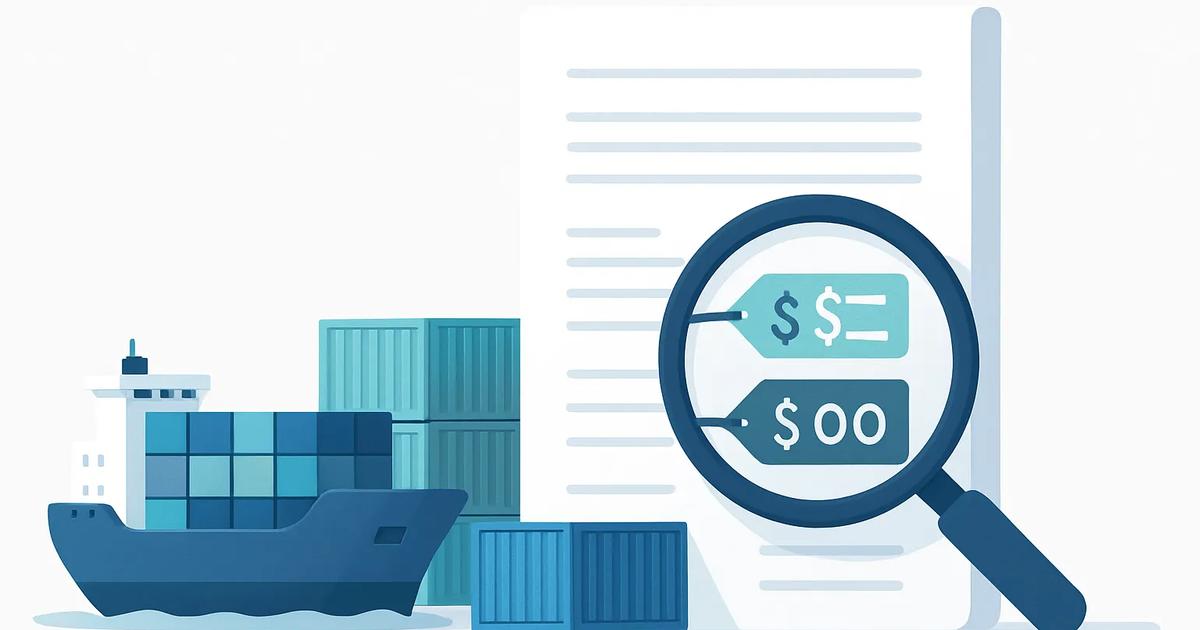
Trade-based money laundering, or TBML, is the process of disguising illicit money by manipulating international trade transactions. Rather than moving funds through an obviously suspicious transfer, criminals use the purchase, sale and shipment of goods to transfer value between parties, countries or accounts.
The transaction may involve real goods and genuine companies, which makes TBML especially difficult to identify. A shipment, invoice, bill of lading and payment can all appear legitimate in isolation. The issue is often that the stated price, quantity, quality, destination or business purpose does not match the underlying commercial reality.
How trade-based money laundering works
In ordinary trade, an exporter ships goods and an importer pays an agreed price. TBML abuses this process. One party can overstate or understate the value of goods, create duplicate payment obligations, or document goods that are different from what was shipped. The resulting gap between the paperwork and the real value becomes a way to move value.
For example, if an importer knowingly pays far more than goods are worth, the excess payment can transfer value to the exporter. If goods are deliberately underpriced, value can move in the opposite direction. The parties may be related, acting on behalf of the same criminal network, or connected through intermediaries. Not every unusual trade deal is illicit, however. Prices can vary for legitimate reasons including contracts, quality, timing, freight costs and market disruption.
Common TBML techniques
- Over-invoicing and under-invoicing: Goods are recorded at a price above or below their true market value. Over-invoicing can allow an importer to send excess value abroad, while under-invoicing can conceal value moving the other way or reduce duties and taxes.
- Multiple invoicing: The same shipment is invoiced more than once, enabling repeated payments for one set of goods. Slight changes to invoice numbers, dates or descriptions can make duplicates harder to spot.
- Over-shipment and under-shipment: The invoice may state a larger or smaller quantity than was actually delivered. This creates a value discrepancy even where the goods and payment are real.
- Misdescribed goods: Documents may falsely describe the type, grade, quality or condition of goods. A low-value product might be declared as a premium product, or vice versa, to justify an artificial price.
- Phantom shipments: Trade documents are created for goods that were never shipped. Payments may be supported by invoices, purchase orders or transport records that are false, altered or tied to a fictitious transaction.
Why TBML is difficult to detect
Global trade produces a vast volume of transactions and documents. Banks, freight providers, customs agencies and businesses may each see only one portion of a deal. A bank may see a payment and supporting invoice but not inspect the cargo. Customs may examine a declaration and shipment but not know the full payment arrangement or the commercial relationship between buyer and seller.
Transactions also cross multiple jurisdictions with different data systems, disclosure rules and enforcement powers. A deal can include an exporter, importer, beneficial owners, brokers, logistics firms, insurers and banks in several countries. Beneficial ownership means the natural person who ultimately owns or controls a company. Layers of intermediaries can obscure who is directing the transaction.
Most importantly, trade documents can look routine. An invoice alone rarely establishes fair value, because many goods have variable specifications and negotiated prices. Effective detection therefore depends on connecting payment activity, shipping information, customer behavior and external market data where available.
Red flags that merit review
A red flag is an indicator requiring further assessment, not proof of financial crime. Firms should consider the full context, including the customer’s business model, trade history and the countries involved. Common warning signs include:
- Prices that are materially inconsistent with credible market information, the stated quality of the goods or the customer’s normal trading activity.
- Goods that do not fit a company’s known business, such as a small electronics distributor suddenly trading in industrial chemicals or precious metals.
- Unusual or commercially unclear routing, including repeated transshipment through locations unrelated to the buyer, seller or product.
- Third-party payments, particularly where the payer is not named in the contract or has no clear connection to the transaction.
- Repeated amendments to invoices, shipping records or payment instructions without a convincing commercial explanation.
- Payments, shipment volumes or transaction frequency that are inconsistent with the customer’s expected capacity or financial profile.
Who detects TBML
Banks that finance or process trade payments are important gatekeepers. Trade finance is the funding and payment activity supporting imports and exports, often using instruments such as letters of credit or documentary collections. Banks can screen parties, review documents, monitor payment patterns and escalate concerns under anti-money laundering rules. Their visibility is limited, though, and documents should not be treated as conclusive evidence that goods exist or are correctly valued.
Customs authorities play a separate role by reviewing declarations, assessing duties, inspecting cargo and identifying discrepancies in quantities, origin and product descriptions. Cooperation between customs, financial intelligence units and law enforcement can help connect trade anomalies with financial flows.
Businesses also need effective know-your-business, or KYB, controls. KYB is the process of verifying a business customer or counterparty, understanding its ownership and assessing the purpose and expected nature of the relationship. For trade participants, this includes checking that counterparties are legitimate, that their activities are plausible, and that beneficial owners and sanctioned parties are identified where required.
A risk-based response
No single data point will reliably identify TBML. A proportionate, risk-based approach combines counterparty due diligence, sanctions screening, document review, transaction monitoring and investigation of material inconsistencies. For US and EU firms, the exact legal duties differ, but the central task is the same: establish whether a transaction makes commercial sense and investigate when the paperwork and reality do not align.