The INFORM Consumers Act: Marketplaces Now Verify Their Sellers
Since June 2023, the US INFORM Consumers Act has required online marketplaces to verify key details for high-volume third-party sellers. The law brings identity verification into routine e-commerce operations while leaving important enforcement questions to regulators and courts.
Online marketplaces have long faced a basic trust problem: buyers may see a product listing, but often know little about the business or individual behind it. The INFORM Consumers Act, a US federal law that took effect in June 2023, seeks to narrow that gap by requiring major online marketplaces to collect and verify information about high-volume third-party sellers.
The measure does not turn marketplaces into law-enforcement agencies or guarantee that every listing is legitimate. It does, however, create a nationwide baseline for seller due diligence. That makes identity verification, or IDV, a more formal part of e-commerce compliance, particularly in categories vulnerable to counterfeits, retail theft and fraud.
Which sellers are covered
The law applies to a “high-volume third-party seller,” generally defined as a seller that, in a continuous 12-month period during the previous 24 months, made 200 or more discrete sales and generated at least $5,000 in gross revenue through the marketplace. The definition is designed to focus on sellers operating at meaningful scale rather than occasional household sellers.
A third-party seller is distinct from the marketplace itself. A platform selling its own inventory is not, in that transaction, acting as a third-party seller. The law also contains exemptions and distinctions that can matter for particular business models, including some sellers of services and certain regulated businesses.
What marketplaces must collect and verify
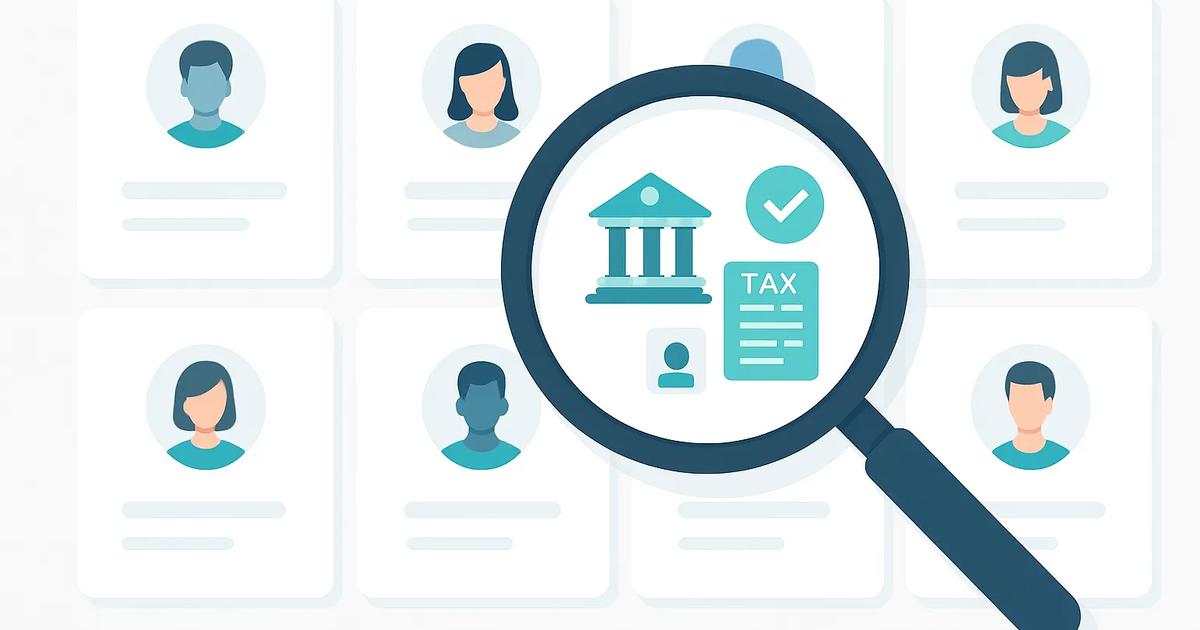
Covered marketplaces must collect information that can tie a seller account to a real person or business and to a payment destination. They must then verify the information using a reliable method, and sellers must certify that the details are accurate and keep them updated.
- A bank account number, or information sufficient to identify the account used to receive marketplace payments.
- Contact information, including the seller’s name, physical address and telephone number.
- A taxpayer identification number, such as a Social Security number for an individual or an Employer Identification Number for a business.
- Information needed to determine whether the seller should be treated as a high-volume third-party seller under the statute.
The statute does not prescribe one universal technical workflow. In practice, marketplaces may combine document checks, database matching, payment-account verification and risk-based review. That flexibility recognizes that a sole proprietor, a small incorporated business and a larger merchant may present different verification challenges. It also means implementation can vary across platforms.
Disclosure gives buyers more context
Verification is only one part of the law. For high-volume sellers that meet the law’s higher public-disclosure threshold, generally $20,000 or more in annual gross revenue, marketplaces must make specified seller details available to consumers in a clear and conspicuous way. Those disclosures include the seller’s name, contact information and physical address, along with information about any different name used to sell on the marketplace.
There are limits. The law provides exceptions intended to address personal safety and other privacy concerns, including circumstances in which a seller’s home address should not be broadly displayed. Marketplaces must balance meaningful buyer transparency with the risk of exposing personal information, especially for individual sellers operating from a residence.
A new compliance layer for e-commerce
Before the INFORM Consumers Act, platforms had their own seller-screening programs, shaped by payment rules, fraud controls and voluntary marketplace policies. The federal law moved certain checks from a business choice toward a legal obligation. For identity vendors, payment providers and marketplaces, that has expanded the importance of tools that establish account ownership, validate tax and contact data, detect synthetic identities and identify linked or repeat accounts.
The policy rationale is straightforward. Counterfeit and stolen goods can be easier to move when sellers can repeatedly create accounts using inaccurate or incomplete details. Requiring marketplaces to establish who higher-volume sellers are can make it harder to operate anonymously, raise the cost of opening replacement accounts and provide a clearer trail when complaints or investigations arise.
But identity checks are not a complete solution. A verified account can still offer infringing or stolen goods, and bad actors can use stolen identities, nominee businesses or compromised financial accounts. Stronger onboarding controls therefore sit alongside listing monitoring, intellectual-property reporting systems, transaction analysis and cooperation with rights holders and law enforcement.
Enforcement and the limits of the law
The Federal Trade Commission, or FTC, can enforce the INFORM Consumers Act, as can state attorneys general. The FTC can treat violations as unfair or deceptive acts or practices under the Federal Trade Commission Act, while state authorities can bring actions on behalf of residents. The enforcement landscape is still developing, so the practical expectations for documentation, verification quality and remediation will continue to be shaped by agency action and court interpretation.
For marketplaces, the central task is operational: identify when a seller crosses the statutory threshold, collect and refresh the required information, verify it reliably and manage sellers that fail to provide it. For buyers, the change offers more information about larger merchants, though not a guarantee of product authenticity. The law’s lasting significance may be that it treats seller identity as core marketplace infrastructure rather than an optional fraud-control feature.