Chargeback Fraud: Where Friendly Fraud Meets Identity
A chargeback can look identical whether it stems from deliberate abuse, a forgotten subscription or a genuine account takeover. Merchants need to preserve evidence that answers the issuer’s question while fixing the customer experience that caused the dispute.
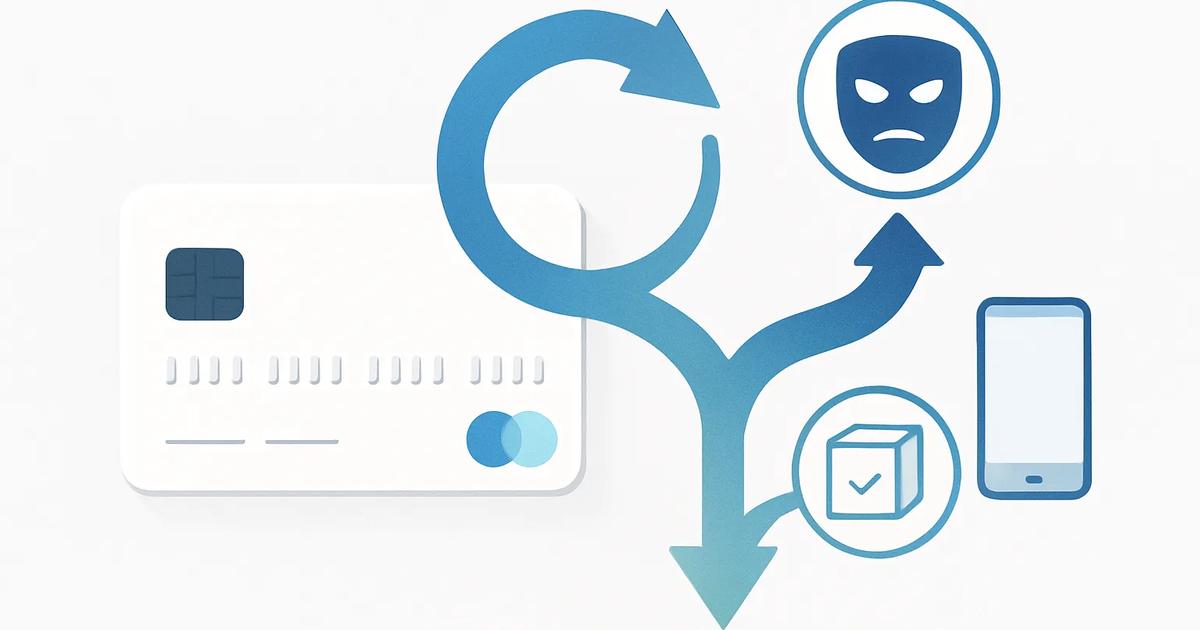
A card dispute is a blunt instrument. To a merchant, the record may say only that a customer claims a transaction was unauthorized, goods did not arrive, or a charge was not recognized. It does not reliably reveal whether the buyer is attempting to keep both the product and the money, has forgotten the purchase, or was genuinely defrauded.
That uncertainty is central to chargeback fraud, often called friendly fraud. The term is widely used, but it can obscure an important distinction: deliberate abuse and genuine buyer confusion can produce the same dispute reason code. The response should be completely different. Yet at the point a dispute arrives, a merchant usually cannot know which one it has.
The same dispute record can describe very different events
In a deliberate abuse case, the buyer made the purchase, received the goods or used the service, and later disputes it to avoid paying. In a confusion case, the buyer may not recognize a shortened billing descriptor, may have forgotten a free trial converted to a paid plan, or may see a household member’s purchase. Neither scenario is the same as third-party fraud, where a criminal uses a stolen card or takes over an account.
For merchants, the operational problem is that an issuer’s dispute workflow is built around the cardholder’s claim, not around a full investigation of intent. A claim marked “unauthorized” may be true, mistaken, or opportunistic. Treating every case as bad faith risks alienating legitimate customers. Treating every case as confusion can invite repeat abuse and leave recoverable revenue on the table.
What should a merchant ask before responding?
Start with the practical question: what can the merchant demonstrate, and what is the disputed reason? Evidence should directly address the claim. A delivery record is useful for a non-delivery allegation, for example, but it may not by itself answer an unauthorized-transaction claim. Card network rules, issuer practices and local consumer protections vary, so merchants should align their response with the applicable dispute reason and deadline.
- Delivery confirmation, ideally showing the delivery address, date, carrier event and, where available, signature or collection evidence.
- Prior order history tied to the same customer account, payment instrument, address or established purchasing pattern.
- Device and session continuity, such as the same logged-in account, device signals, browser session or network pattern being used for the order and earlier legitimate activity.
- A verified identity step at checkout or during account changes, with a record of what was checked, when it occurred and how the customer completed it.
- Clear records of the product or service provided, including digital access logs, subscription consent, cancellation flow and customer-support communications.
What identity verification can, and cannot, establish
Identity verification, or IDV, is the process of checking that a person is who they claim to be. Depending on the service, it can involve document checks, a selfie or liveness test, database matching, or verification of a government-issued digital identity. For a merchant facing a chargeback, its value is often misunderstood.
A successful identity check does not prove that the cardholder authorized a particular purchase. A verified person could still later dispute a transaction, a family member could use a saved card, or a verified account holder could be coerced or deceived. It also does not replace payment authentication, such as card-network authentication flows, or the evidence required under a specific dispute program.
What it can show is narrower and still useful: the account was likely being used by its established owner at the relevant time, rather than by an unknown attacker who had taken it over. When combined with device and session continuity, a recent verified identity event can narrow the question from “was this an account takeover?” to “what was the buyer’s intent and what did they understand?” That is a more defensible basis for deciding whether to challenge a dispute, contact the customer, or issue a refund.
How to respond without making the problem worse
Merchants should avoid building rebuttals from a pile of loosely related data. Issuers and their review processes need a concise account: the customer ordered on this date, used this account, received or accessed this product, and had this relevant history. Preserve original timestamps and records rather than relying on summaries that cannot be substantiated.
The best outcome may sometimes be prevention rather than representment, the formal process of contesting a chargeback. If a confusing descriptor, unclear renewal terms or difficult cancellation path is driving disputes, stronger evidence will not solve the underlying problem. Test whether customers can recognize the charge, find support quickly and cancel without friction. A prompt, well-trained support response can resolve a misunderstanding before it reaches the issuer.
A decision under uncertainty
There is no single signal that separates friendly fraud from a valid complaint. Delivery proof can be misleading, identity verification has limits, and a familiar device may indicate a shared household rather than the account holder. Merchants should use the evidence to assess likelihood, not to claim certainty they do not have.
The practical goal is twofold: challenge disputes where the records meaningfully support the transaction, and reduce the avoidable confusion that creates indistinguishable claims. Identity evidence belongs in that picture, but it is most valuable when it helps rule out account takeover rather than when it is treated as proof of authorization.