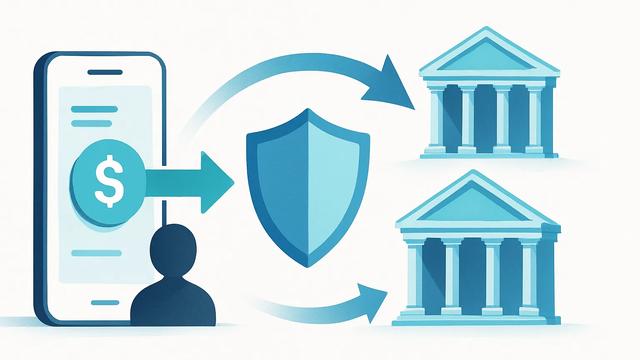
Money mule schemes turn legitimate bank accounts into temporary channels for stolen money. Because the account holder’s identity is genuine, the most important warning signs often emerge only after onboarding.
UK payment firms have had to reimburse many victims of authorised push payment fraud since October 2024. By splitting the cost between the sending and receiving firms, the regime puts new financial weight behind controls against mule accounts.
Fake IDs now range from borrowed real documents to AI-generated images designed for remote verification. The most effective controls compare the visible document data with machine-readable data and add checks that address genuine IDs used by the wrong person.
Deepfake video, synthetic documents and camera-feed injection are reshaping identity fraud from a specialist attack into an operational risk. Verification providers are adding layered defenses, but businesses still face trade-offs among security, privacy and conversion.
A fast ID check is not about reading body language as proof. For bar, retail and onboarding teams, it means using a consistent sequence: inspect the card, compare it with the holder, ask a limited follow-up question and understand what a scanner actually checks.
Money laundering is commonly described in three stages: placement, layering and integration. The model is useful for compliance, but real cases often overlap, repeat or omit stages altogether.
A chargeback can look identical whether it stems from deliberate abuse, a forgotten subscription or a genuine account takeover. Merchants need to preserve evidence that answers the issuer’s question while fixing the customer experience that caused the dispute.
Synthetic identity fraud combines genuine personal data with invented details to create a person who does not exist. Its slow, patient approach makes it difficult for lenders, benefit agencies and identity systems to spot before losses emerge.
New account fraud begins before a customer has anything to lose: a criminal creates an account using a stolen, synthetic or manipulated identity. The quality of checks at onboarding often determines whether later fraud can be prevented or merely contained.
Injection attacks bypass the phone or webcam at the center of remote identity verification. Rather than presenting a fake face to a lens, fraudsters can feed prepared imagery directly into the software path meant for a live capture.
 Fraud & Threats