The Three Stages of Money Laundering
Money laundering is commonly described in three stages: placement, layering and integration. The model is useful for compliance, but real cases often overlap, repeat or omit stages altogether.
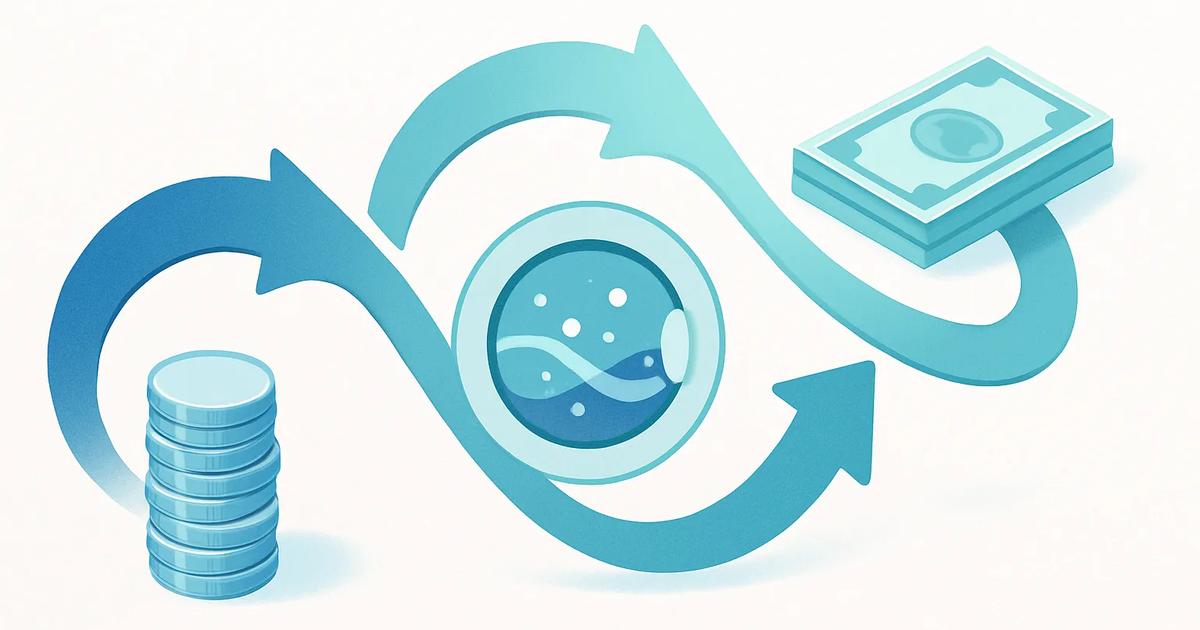
Money laundering is the process of making proceeds of crime appear legitimate. The established three-stage model is placement, layering and integration. It gives banks, payment firms and other regulated businesses a practical way to identify where suspicious activity may enter and move through the financial system.
It is not a universal sequence. ComplyAdvantage notes that not all laundering uses all three stages, and that stages can combine or repeat. The framework principally describes how compliance teams assess risk, investigate alerts and design controls, rather than a fixed script followed by every criminal network.
Why three stages, not four?
Search results sometimes refer to four stages of money laundering. Those accounts usually split one part of the process into a separate category, such as concealment, or add a preparatory step. The established anti-money-laundering framing remains the three stages of placement, layering and integration. A four-stage label can be useful for a particular training model, but it should not be presented as replacing the standard framework.
1. Placement: getting illicit funds into circulation
Placement is the initial introduction of criminal cash or value into the financial system or the legitimate economy. Cash-heavy crimes create an immediate problem: large deposits, purchases or exchanges can attract scrutiny. Financial institutions use transaction monitoring, customer due diligence and legally required reporting to identify unusual activity at this point.
- Structuring, sometimes called smurfing, divides cash into smaller transactions intended to remain below reporting thresholds. A transaction can still be suspicious even if it is below a threshold.
- Cash smuggling moves physical currency across borders, potentially into a jurisdiction with weaker controls or a more accessible financial system.
- Criminals may buy monetary instruments, including traveller's cheques and prepaid cards, to convert cash into another form of value.
- A business with low variable costs but substantial cash receipts can be used to mix illicit cash with genuine takings and make the proceeds look like ordinary revenue.
2. Layering: obscuring the trail
Layering creates distance between criminal proceeds and their source through transactions that make records harder to follow. It can involve transfers between accounts, including accounts in multiple countries; offshore accounts and shell companies, meaning entities with little or no independent commercial activity; and trade-based schemes. Examples include false or over-inflated invoices and phantom shipping, where goods are misdescribed, overpriced or may not exist.
Cryptoassets can be used at this stage. Chain-hopping moves value between blockchain networks; mixing or tumbling services seek to obscure transaction links by pooling and redistributing funds; and criminals can cycle fiat currency through cryptoassets and back into fiat. In this model, crypto is a layering tool, not a placement one. Public blockchains may also leave records that investigators can analyze, while privacy tools and cross-chain activity can complicate that work.
3. Integration: spending or investing apparently clean funds
Integration returns laundered value to the legitimate economy in a form that appears explainable. It may include purchases of real estate and high-value assets such as art and vehicles, investment in legitimate businesses, or payments to fake payroll employees. Criminals may also sell property acquired during layering, seeking sale proceeds that appear to be a normal investment return.
A worked example
Consider a fictional group that receives cash from illegal sales. It spreads the cash across small purchases of prepaid cards and adds some to the reported receipts of a cash business. That is placement. The group then transfers funds through several company accounts, uses inflated invoices for supposed equipment, and moves part of the value through cryptoassets before converting it back to euros or dollars. That is layering.
Finally, a company controlled by the group buys a property and later sells it to an unrelated buyer. The sale proceeds, supported by contracts, bank transfers and an apparent asset history, may look less connected to the original cash. That is integration. Investigators would not treat the labels as proof of wrongdoing: they would test the customer, beneficial ownership, transaction purpose, invoices, property valuation and source of funds.
Scale is uncertain, but the risk is substantial
The UK National Crime Agency says there are no exact figures, but that there is a realistic possibility that hundreds of billions of pounds are laundered annually through or within the UK.
Global estimates require similar caution. The widely repeated claim that laundering equals 2 to 5 percent of global GDP traces to a 1998 United Nations Office on Drugs and Crime estimate, not to a current measurement. The absence of a precise total does not lessen the operational challenge: effective controls must account for cash, companies, cross-border payments, trade and cryptoassets without treating every unusual transaction as criminal.