Types of Financial Fraud: The Schemes Behind the Losses
Financial fraud takes many forms, but most schemes begin with a stolen or invented identity, a compromised account, or a victim persuaded to act. This guide maps the major types, the warning signs, and the role of identity verification in prevention.
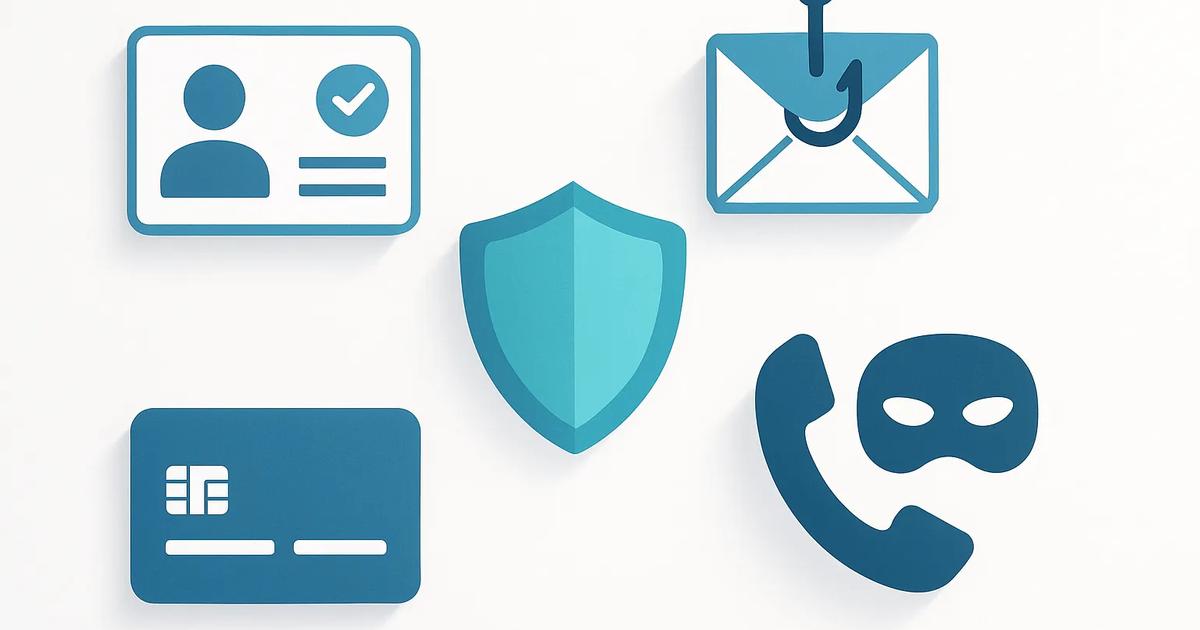
Financial fraud is not one crime. It is a set of schemes used to steal money, obtain credit, take over accounts, or move illicit funds through the financial system. The methods differ, but the underlying challenge is often the same: a bank, fintech, marketplace, or consumer must decide whether a person and a transaction are genuine.
Identity verification, or IDV, helps establish that a customer is the real person behind an application or account. It can combine document checks, biometric matching, device and behavioral signals, and database checks. It is most effective when paired with transaction monitoring and clear customer warnings. This hub introduces the main fraud types and points to areas for deeper coverage.
Fraud using stolen identities
These schemes rely on real personal information obtained through data breaches, phishing, malware, mail theft, or social engineering. A valid name, address, Social Security number or national identifier can make a fraudulent application look credible.
Identity theft
Identity theft is the unauthorized use of someone else's personal data to impersonate them, open services, access funds, or commit other crimes. Warning signs include unfamiliar credit inquiries or financial accounts, and unexpected password-reset messages. The main defense is layered identity checks, including document and biometric verification where appropriate, plus monitoring for mismatches between identity, device, and behavior. Read deeper coverage of identity theft and identity theft protection.
New account fraud
New account fraud occurs when a criminal opens a bank, credit, telecom, or other account using stolen identity data. It is often an early step before borrowing, making purchases, or receiving fraud proceeds. Warning signs include repeated applications from one device, inconsistent contact details, or a newly opened account that quickly changes payment details. The main defense is strong onboarding IDV, duplicate-account detection, and risk-based review before an account is activated. See our guide to new account fraud.
Card fraud
Card fraud is the unauthorized use of payment-card details, whether the physical card is stolen, a card number is compromised, or data is used for online purchases. Warning signs include unusual transaction locations, rapid small purchases used to test a card, or a new device making high-value orders. The main defense is real-time transaction monitoring, tokenization, step-up authentication, and merchant controls. Explore deeper coverage of card fraud and card-not-present fraud.
Fraud using fabricated identities
Synthetic identity fraud
Synthetic identity fraud uses a made-up identity assembled from real and false information. For example, a criminal may combine a genuine Social Security number with a different name and date of birth, then build credit over time. Warning signs include an identity with little verifiable history, recycled contact details, or many applications linked to one device. The main defense is identity proofing that checks data consistency and detects linked identities, rather than relying on credit history alone. Read our synthetic identity fraud explainer.
Fraud through compromised accounts
Account takeover
Account takeover, often called ATO, happens when a criminal gains control of an existing account using stolen passwords, session cookies, one-time codes, or social engineering. Warning signs include a login from an unfamiliar device followed by changed contact details or a new payee. The main defense is phishing-resistant multi-factor authentication, device and behavioral analysis, and step-up identity checks for sensitive changes. See our account takeover coverage.
Chargeback and friendly fraud
A chargeback reverses a card payment through the issuer. It becomes friendly fraud when a cardholder disputes a legitimate purchase, whether by mistake or deliberately. Warning signs include repeat disputes after confirmed delivery or a mismatch between a customer’s purchase history and claim. The main defense is accurate transaction records, clear billing descriptors, delivery evidence, and proportionate dispute review. Explore our guide to chargeback fraud and friendly fraud.
Fraud through manipulated victims
In these schemes, the victim is persuaded to authorize a payment or disclose access information. Because the customer may pass an initial identity check, prevention depends heavily on payment-risk signals, intervention, and education.
Authorised push payment fraud
Authorised push payment, or APP, fraud occurs when a victim is tricked into sending a bank transfer to an account controlled by a criminal. It can impersonate a bank, government body, supplier, or relative. Warning signs include urgency, secrecy, or a last-minute request to change bank details. The main defense is payee verification, transaction monitoring, targeted payment warnings, and a pause or confirmation for high-risk transfers. Read more about APP fraud.
Business email compromise
Business email compromise, or BEC, is a targeted impersonation scam that tricks an employee into paying a fake invoice or changing a supplier’s bank details. Warning signs include an executive or vendor requesting unusual secrecy, or a payment instruction sent from a lookalike domain. The main defense is independent callback verification using known contact details, dual approval for payment changes, and email-security controls. See our business email compromise guide.
Investment and romance scams
Investment scams promise returns from fake or misrepresented opportunities. Romance scams build a personal relationship before requesting money, often citing an emergency or inability to meet. Warning signs include guaranteed returns, pressure to move conversations off-platform, or requests for cryptoassets or transfers to third parties. The main defense is scam education, transaction monitoring, and interventions that ask customers to verify the recipient and claim independently. Explore our coverage of investment scams and romance scams.
Why fraud and money laundering are connected
Fraud creates illicit proceeds, but criminals still need to move and use the money without attracting attention. That process is money laundering: concealing the criminal origin of funds so they can enter the legitimate economy. Money mule activity is central to many schemes. A mule is a person who receives and transfers funds for criminals, knowingly or unknowingly, often in return for a fee or a misleading job offer.
- Warning signs of mule activity include an account receiving funds from unrelated people and quickly sending them onward, especially to new recipients or cryptoasset services.
- The main defense is ongoing customer due diligence: verify identity at onboarding, monitor transaction patterns, investigate linked accounts, and file required reports with relevant authorities.
- For a fuller view, read our guides to money mules, anti-money-laundering controls, and transaction monitoring.
No single control stops every type of fraud. Effective programs connect identity checks at onboarding and account recovery with device intelligence, payment screening, fraud operations, and customer communication. The right balance should reduce criminal opportunity while avoiding unnecessary friction for legitimate customers.