eKYC: How Remote Onboarding Replaced the Branch Visit
Electronic know-your-customer, or eKYC, has shifted account opening from the branch counter to a smartphone screen. Its spread reflects not only better software, but also the identity infrastructure and laws that make remote verification possible.
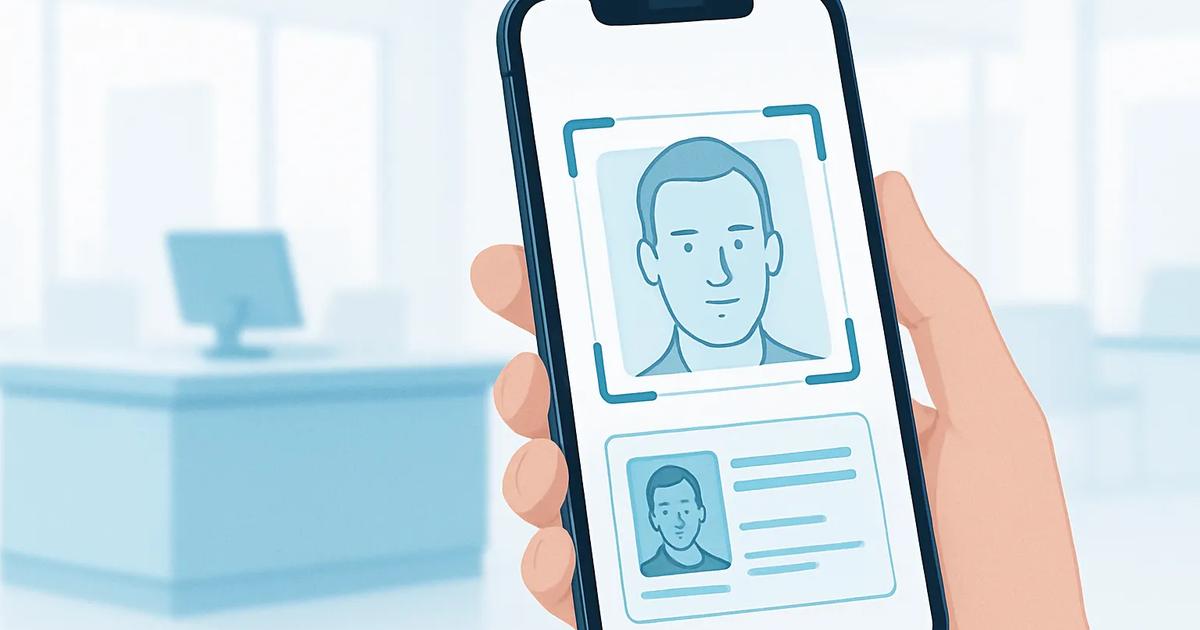
For much of modern banking, opening an account meant appearing at a branch with a passport, driving licence or other identity document. A staff member compared the customer with the photograph, inspected the document, copied its details and, in some cases, checked records before allowing the relationship to begin.
Electronic know-your-customer, or eKYC, replaces much of that encounter with a remote workflow. A customer photographs an identity document, captures a selfie or short video, and permits checks against available records. Banking and fintech have been its leading adopters because digital account opening is central to their economics, but the model now extends to payments, telecoms, insurance and other regulated services.
What the branch visit was designed to establish
The old process did more than collect a photocopy. It sought to answer several distinct questions: Is the document genuine? Does it belong to the person presenting it? Does that person exist in authoritative or commercially reliable records? And is the institution meeting its wider obligations to know its customer and detect financial crime?
Remote onboarding assigns those tasks to different technologies. Document capture software guides a user to photograph a passport, national identity card or driving licence. It reads data from the image using optical character recognition and examines security features, layout and signs of alteration. Where a chip can be read through a phone's near-field communication function, cryptographic data may provide stronger evidence than an image alone.
A facial biometric comparison then measures whether the face in a selfie or video corresponds to the portrait on the document. Liveness detection is intended to establish that the sample comes from a present person rather than a printed photo, screen replay or recording. Finally, providers may compare submitted data with government registries, document-issuance systems, credit-reference files, mobile-network data or other trusted sources, depending on the market and permitted use.
- Document verification replaces the clerk's visual inspection for signs that an ID is altered, expired or inconsistent.
- Biometric matching replaces the face-to-photo comparison at the counter.
- Liveness checks replace, imperfectly, the assurance gained from seeing a person interact in front of staff.
- Database and sanctions screening replace or accelerate record checks that once occurred after paperwork was submitted.
Infrastructure, not just software, sets the limit
The apparent simplicity of an app-based journey can obscure its dependencies. eKYC works best where identity documents are standardized, official registries are accurate and accessible, and institutions can lawfully query or rely on them. It also requires enough mobile-phone penetration, camera quality and connectivity for customers to capture usable evidence.
A legal basis is equally important. Rules must permit non-face-to-face customer due diligence and define what level of assurance is required. In the European Union, anti-money-laundering rules, the eIDAS framework for electronic identification and national supervisory expectations shape the available routes, while implementation still varies by member state and product. In the United States, financial institutions operate under federal customer-identification and anti-money-laundering requirements, alongside state, privacy and sector-specific rules. Neither region offers a single identical eKYC path for every institution.
Markets missing any one of these elements cannot simply buy their way into remote onboarding. A strong vendor cannot compensate fully for unreliable civil records, a customer base without suitable devices, or laws that still require physical presence. That helps explain why eKYC adoption remains uneven globally, and why some providers retain branch, agent-assisted or video-based alternatives.
Fraud moved from paper to the camera pipeline
Removing the counter also removed a check that was difficult to automate against: an experienced person observing a customer, handling a document and noticing unusual behavior. Branch processes were not fraud-proof, but they created friction for impersonators and document fraudsters.
The attack surface has consequently shifted. Fraudsters still use stolen identities and altered documents, but they increasingly target the remote evidence itself. Techniques include presentation attacks using masks, images or recorded video; manipulated document images; device compromise; and injected synthetic media, in which fabricated or altered images and video are fed directly into an app's capture process rather than shown to a camera. Generative AI has made realistic face and voice content cheaper to produce, raising the value of controls that can detect injection, tampering and coordinated fraud patterns.
No single test resolves that risk. Stronger programs combine document and biometric signals with device intelligence, transaction monitoring, velocity checks, fraud-network analysis and manual review for higher-risk cases. They must also account for false rejects, accessibility and demographic performance. A system that blocks legitimate customers can create both consumer harm and a commercial incentive to weaken controls.
One stage in a wider KYC program
eKYC is often used loosely to describe the entire digital onboarding experience, but it is only part of know-your-customer compliance. KYC includes identifying and verifying customers, understanding the purpose and expected nature of an account, screening against sanctions and politically exposed person lists where required, assessing risk, and monitoring activity over time. For companies, it can also involve identifying beneficial owners and verifying business information.
Remote onboarding has made account opening faster and available beyond branch hours, helping banks and fintechs reach customers who live far from physical locations. Its limits are equally clear: confidence depends on the quality of the underlying identity ecosystem, the design of the risk controls and the institution's willingness to escalate uncertain cases. The branch visit did not disappear everywhere. It became one option in a broader set of ways to establish trust.