Proof of Address: What Counts, What Does Not, and Why It Varies
Proof of address is used to connect an applicant to a location, but the documents that satisfy the request vary by institution and use case. It can be a practical hurdle for people whose names do not appear on household bills or formal records.
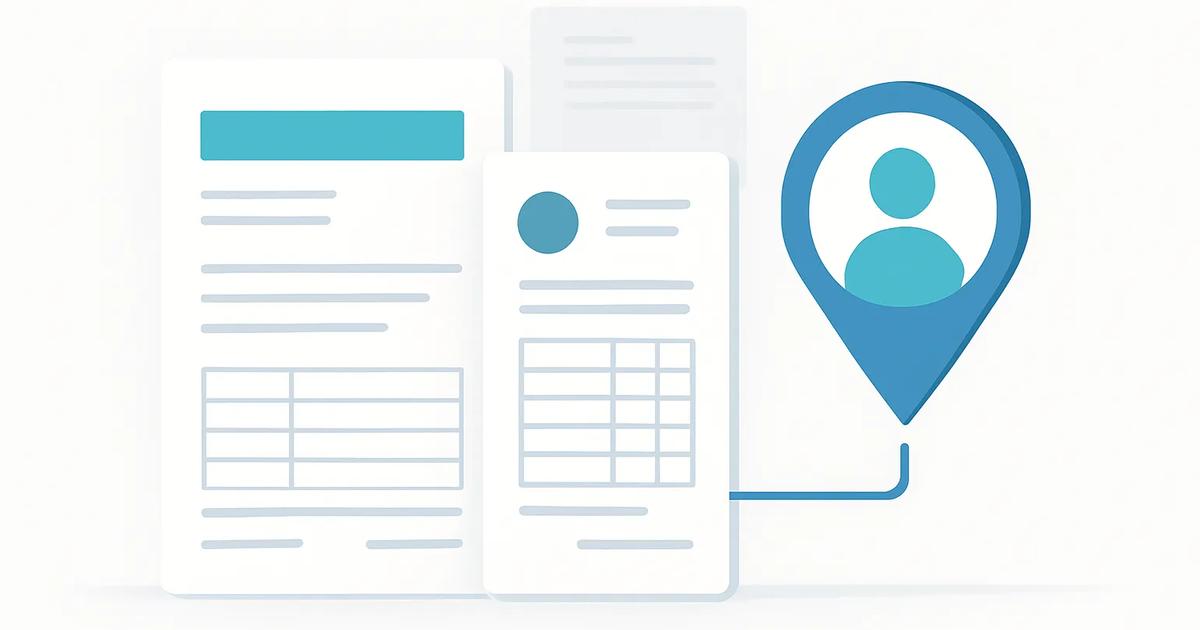
A request for proof of address is often treated as a routine part of opening an account, renting a home, obtaining regulated services or accessing local benefits. But the phrase describes a narrow task: establishing a documented link between a person and a particular location. It is not, by itself, an identity check, and it does not prove that the person presenting the document is the person named on it.
That distinction matters in identity verification, or IDV, the process organizations use to assess whether someone is who they claim to be. A passport or state-issued driving licence may support identity verification. Proof of address usually supports a separate question: where the applicant is resident or receives mail. In practice, providers may ask for both, then combine checks and fraud controls.
What proof of address is for
Organizations request address evidence for several reasons. A financial institution may need to understand the jurisdiction in which a customer lives for tax reporting, sanctions screening, anti-money-laundering controls or product availability. An insurer may use an address to price or determine eligibility for coverage. A public authority or utility may use it to establish access to locally administered services.
The level of assurance needed depends on the decision. A streaming service checking whether a plan is available in a market has a different risk profile from a bank onboarding a customer. Neither use should be confused with proof that an applicant physically occupies a home every day. Most documents show that an organization recorded an address at a particular time, not continuous residence.
What commonly counts, and what often does not
The following are representative examples, not a universal rule. A document accepted by one bank, exchange, landlord or government agency can be rejected by another, even within the same country. Institutions commonly set recency limits, often asking for documents dated within the previous few months, and may require the applicant's full name and residential address.
- Commonly accepted examples include a recent utility bill for electricity, gas, water, fixed-line internet or similar household services; a bank or credit-card statement; a government tax notice; a local-authority or municipal bill; and, in some cases, a current tenancy agreement or mortgage statement.
- Commonly rejected examples include mobile-phone bills, because the service is portable; retail receipts and parcel labels; screenshots that cannot be independently verified; documents addressed only to a household or another person; expired records; and documents showing a postal box rather than a residential location.
- Some providers also decline insurance documents, digital-only statements, prepaid utility accounts or documents issued by a private business. Others accept them. The decisive issue is the provider's policy and its ability to assess the document's source, date and signs of alteration.
Why accepted-document lists vary
There is no single accepted-document list that applies across the United States, the European Union or, in most cases, even across one national market. Laws and regulations may require organizations to identify customers, manage money-laundering risk, meet tax obligations or confirm eligibility. They rarely prescribe one exhaustive proof-of-address list for every institution and circumstance.
Instead, organizations typically create their own lists based on risk appetite, product design, fraud experience, available verification technology and operational cost. Risk appetite means the amount and type of risk an organization is prepared to accept while pursuing its business. A bank offering cross-border accounts may demand stronger or more recent evidence than a domestic retailer. Two banks in the same country can therefore accept different documents without either list being the country's universal standard.
Digital verification has added another layer. Some providers compare an entered address with credit-reference data, public records or specialist databases rather than relying solely on a scanned bill. These systems can reduce paperwork for people with established records, but they can also produce gaps when databases are incomplete, addresses are newly created or an applicant has little credit history.
The people conventional rules leave out
Document-led address checks can exclude people whose housing arrangements are ordinary but poorly reflected in formal records. This includes adults living with parents or other family members, tenants in shared housing, people whose utilities are bundled into rent, recent movers, people in temporary accommodation and those using informal housing arrangements. In each case, bills and account statements may be issued in someone else's name or may still show an old address.
The burden falls particularly heavily on younger and lower-income applicants, who are more likely to share homes, move frequently, lack credit products or have utilities controlled by a landlord or family member. It can also affect migrants and people leaving abusive households, for whom conventional documents may be unavailable or unsafe to obtain.
An address document is evidence of an administrative record, not a complete measure of whether someone has a real connection to a home.
A proportionate approach
For applicants, the practical response is to check the specific organization's current requirements before submitting documents and ask about alternatives when household bills are not in their name. Possible alternatives may include a tenancy letter, a letter from a government body, a bank statement after an address update, or a supported declaration, but acceptance varies.
For organizations, clear explanations of purpose, accepted alternatives, date requirements and escalation routes can reduce avoidable rejection. The core question should remain proportionate to the decision: what evidence is needed to establish a credible link to an address, without treating proof of address as a substitute for identity verification or a proxy for social stability?