Reading the Passport Chip: NFC Verification Comes to the Phone
Near-field communication lets a phone inspect the signed data inside an electronic passport, adding a cryptographic check to remote identity verification. It can materially improve document assurance, but it does not eliminate operational and coverage gaps.
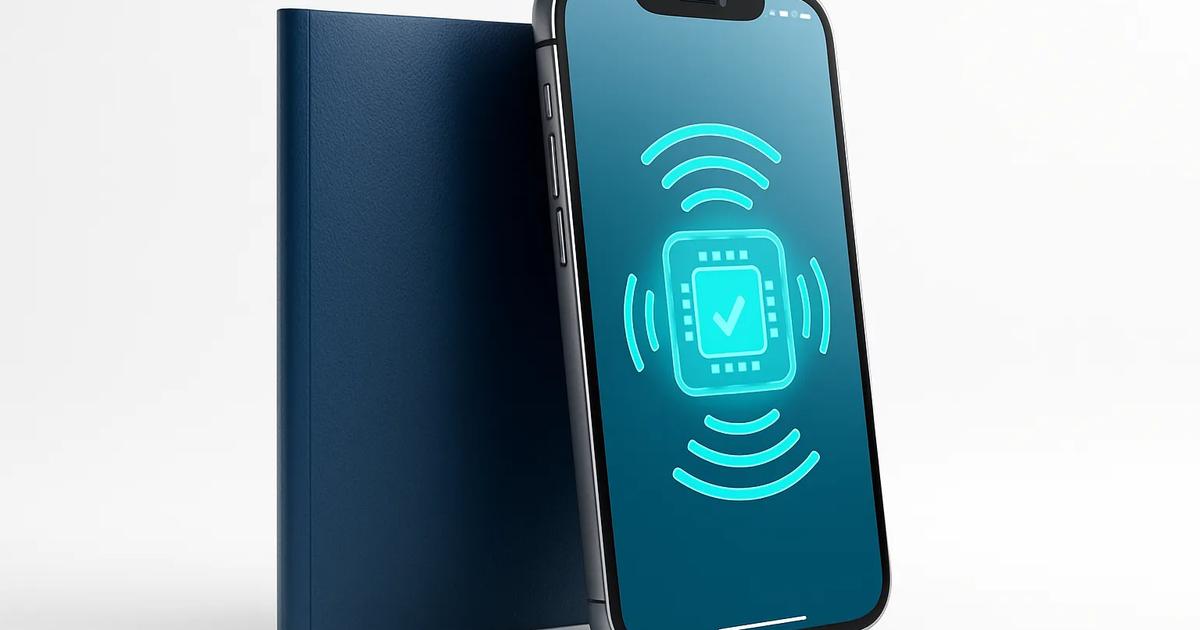
A passport check on a phone has traditionally meant photographing a document, extracting its printed fields and judging whether its security features look genuine. A growing alternative asks the applicant to place an electronic passport against the back of a smartphone. Using near-field communication, or NFC, the same short-range radio technology used for contactless payments, the phone can read data held on the passport chip.
The result is a stronger form of document evidence for remote identity verification. Modern biometric passports, often marked with a small camera-like e-passport symbol, contain an International Civil Aviation Organization, or ICAO, chip. The chip holds identity data and a portrait image, along with cryptographic protections that allow a verifier to test whether the data was issued and signed by the stated passport authority.
What the phone verifies
The central check is commonly called passive authentication. The chip contains a signed security object that lists cryptographic hashes, or digital fingerprints, of its data groups. A verification service compares those hashes with the data it reads and verifies the issuer's digital signature through the relevant certificate chain. In practical terms, a changed name, replaced photo or altered data record will not pass as an authentic signed record.
That is a meaningful difference from an image-only scan. A high-quality counterfeit, a reprinted data page or an edited image can sometimes appear convincing to optical character recognition and visual fraud checks. It cannot create a valid signature from a passport issuer for modified chip data. The check also helps establish that the application is using data from an e-passport chip rather than only a photograph of one.
The distinction matters, but it should not be overstated. Passive authentication principally establishes data integrity and issuer provenance. It is not, by itself, proof that the person holding the phone is the rightful passport holder. A copied set of genuine chip data can remain cryptographically valid in some threat scenarios. Providers therefore combine chip reading with possession signals, document checks, selfie comparison and presentation-attack detection, often called liveness detection.
From the printed zone to a face match
A typical journey begins with a user photographing or typing the machine-readable zone, or MRZ, the two lines of standardized characters at the bottom of a passport's identity page. The MRZ supplies document details and check digits used to derive access keys. The phone then prompts the user to hold the passport to its NFC antenna, usually near the top or center of the handset.
- The app uses the MRZ-derived keys to establish access to the chip. Depending on the passport and country, this may use Basic Access Control or the newer Password Authenticated Connection Establishment, known as PACE.
- It reads the relevant signed data groups, typically including biographical fields and the facial image stored in the chip.
- It validates the security object, the data hashes and the issuing authority's signature, subject to having current and trusted issuer certificates.
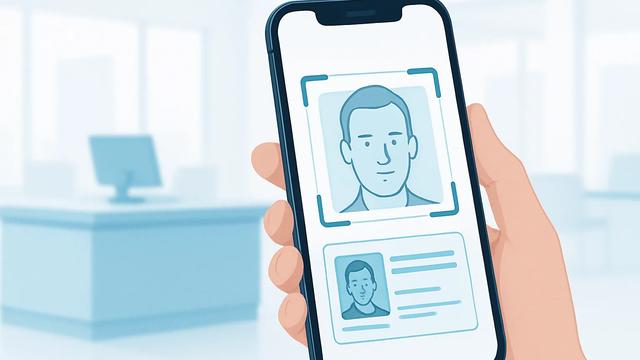
- It captures a live selfie and compares it with the chip portrait. Liveness controls seek to distinguish a present person from a replayed image, video or mask.
Some passports support stronger chip-to-document checks, including active authentication or chip authentication, which can help detect certain cloned chips. Availability varies by document generation and national implementation. A well-designed service should report which checks actually ran rather than treating every NFC read as equivalent.
Why regulated onboarding is interested
Banks and other financial institutions are adopting NFC passport reads in remote account opening because they can raise confidence in a customer identity without requiring a branch visit. The technology is also appearing in crypto-asset onboarding, where platforms face anti-money-laundering and know-your-customer obligations and have sought more resilient controls against document fraud. In both sectors, it is usually one input to a broader risk decision, not an automatic approval.
Travel is another natural setting. Airlines, travel platforms and border-adjacent identity services can use the chip to pre-validate passport details before a journey, although this does not replace the inspection and authority checks performed at a border. For US and European organizations, implementation also raises privacy questions: passport data and facial biometrics are sensitive personal data, particularly under the EU General Data Protection Regulation. Data minimization, encryption, retention limits and a clear legal basis remain essential.
The practical limits
NFC is not frictionless for every applicant. A read can fail when a passport is moved too soon, a phone case interferes, the antenna position is unclear, the chip is damaged or the app does not handle a particular document configuration well. Older passports may have no electronic chip at all. Not every handset supports NFC, and support can vary by operating system, model, regional configuration and app permissions.
Coverage also depends on certificate availability and on the verifier's ability to validate the issuing country's trust material. The ICAO framework is global, but operational access to timely certificate updates and support for individual document profiles are uneven. Services need a fallback, typically an image-based document review with additional fraud controls, without presenting it as the same assurance level.
For users, the value is straightforward: a phone can inspect evidence that is much harder to forge than a picture of a passport. For relying organizations, the harder task is operational. They must explain the extra step clearly, handle failures fairly, protect biometric data and calibrate their decisions to what chip verification proves, and what it does not.