SIM Swap Attacks: Why Your Phone Number Is a Weak Identity
A phone number is useful for reaching people, but it is a poor standalone credential. SIM swaps exploit that mismatch, turning mobile account takeover into access to email, banking and other services that rely on texted codes.
For years, the mobile phone number has served as a convenient stand-in for identity online. It receives one-time passwords, unlocks password-reset flows and helps customer-support teams find an account. But a number is not inherently bound to the person using it. It is an account attribute managed by a carrier, and that makes it vulnerable to SIM swap fraud.
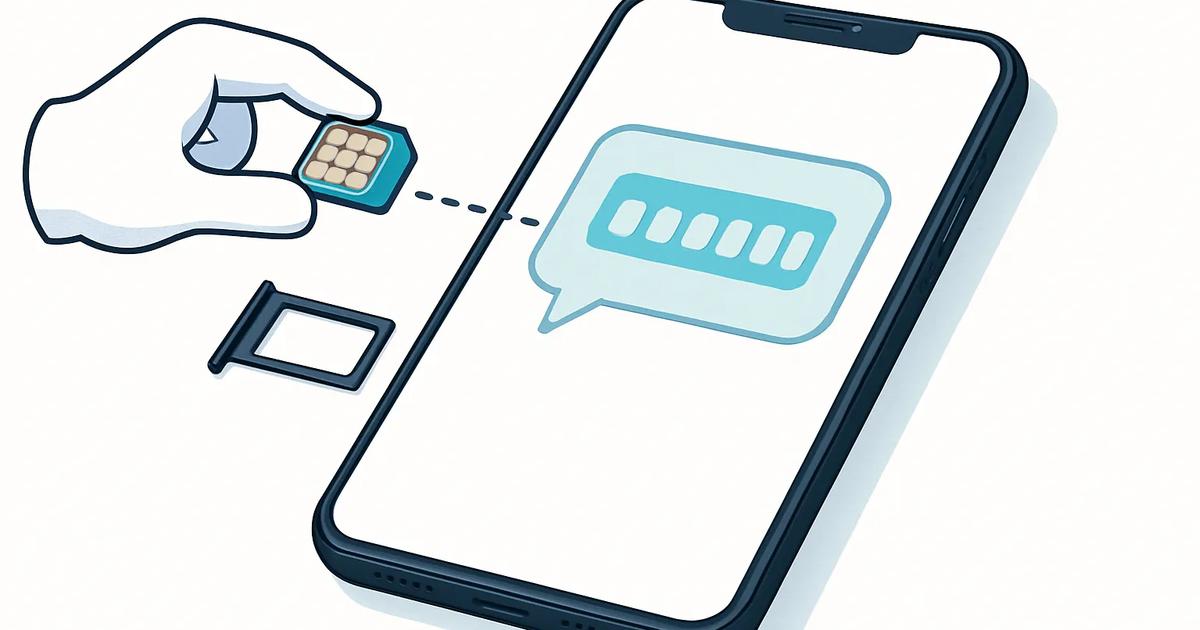
In a SIM swap, an attacker gets a victim's phone number moved to a subscriber identity module, or SIM, that the attacker controls. The transfer can be requested in a retail store, through customer support or online, depending on a carrier's processes. Once the transfer succeeds, calls and text messages intended for the victim can arrive on the attacker's device.
How a SIM swap becomes account takeover
Fraudsters commonly begin with personal information gathered from data breaches, phishing, social media or other scams. They may impersonate the customer and persuade a carrier representative to activate a replacement SIM or port the number to another provider. In some cases, criminals have sought help from insiders. The technical step can be quick, but the consequences can extend well beyond the mobile account.
The immediate warning sign is often a phone that suddenly loses service without an obvious explanation. That outage can mean a carrier problem, but it can also indicate that the number has been reassigned. During that window, an attacker may request password resets for services linked to the number and receive the text-message verification codes needed to complete them.
Text messages used for login protection are often described as SMS two-factor authentication. Two-factor authentication requires a second proof in addition to a password, but not all second factors offer the same resistance to takeover. A code sent by SMS may prove control of a phone number at that moment. It does not reliably prove that the person holding the phone is the account owner.
Why recovery flows create the larger risk
The greatest weakness is frequently account recovery rather than ordinary sign-in. A service may protect an account with a strong password or an authenticator app, then allow a user to reset those protections through a code sent to a registered phone number. If the number is hijacked, the recovery process can become a route around the very controls meant to stop an intruder.
Email accounts are especially consequential because they can be used to reset passwords for many other services. Financial, cryptocurrency, shopping and social-media accounts may also be exposed where a number is accepted as the primary recovery credential. Institutions vary in their controls, and some add device checks, fraud monitoring or additional verification, but users should not assume that a text code alone is a strong identity check.
Carriers face tighter US requirements
US regulators have responded by placing more explicit obligations on wireless carriers. The Federal Communications Commission adopted rules requiring providers to use secure methods to authenticate customers before completing SIM changes and number ports. The rules also require customer notifications and processes that let subscribers lock their accounts against certain porting or SIM-change requests.
These measures address a real gap, but they cannot eliminate social engineering or implementation failures. Authentication is only as strong as the evidence a carrier accepts, the training of staff and the security of self-service systems. The details of enforcement and carrier practices continue to develop, so consumers should check what safeguards their own provider offers rather than assuming protections are identical across the market.
In the EU, electronic communications providers operate under data-protection, consumer-protection and security obligations, while national authorities oversee many operational requirements. There is no single, uniform EU rule that makes a phone number a high-assurance identity credential. That is an important distinction as banks, platforms and public services increasingly assess which forms of authentication are appropriate for a given risk.
Better ways to secure high-value accounts
The strongest response is to reduce the importance of the phone number in login and recovery. App-based authenticator codes are generated on a device rather than delivered through the mobile network, so a SIM swap does not redirect them. They still require secure backup and recovery planning if the device is lost.
Passkeys provide a stronger option where available. A passkey is a cryptographic credential stored on a phone, computer or security key and used to approve a sign-in, often with a device's biometric check or PIN. Properly implemented passkeys are designed to resist phishing and are not dependent on SMS delivery.
For providers, the key question is not simply whether a customer can receive a code. It is whether the requested action is high risk. Changing a recovery number, adding a new login method, disabling multi-factor authentication or initiating a large transfer should trigger additional checks. Re-verifying identity with independent evidence, applying a delay and alerting the existing account holder can make rapid takeover harder.
Steps consumers can take now
- Set a unique carrier account PIN or password. Do not reuse a banking, email or social-media password.
- Ask your carrier to enable a port-out lock or number-transfer lock, and understand how it can be removed if you legitimately change providers.
- Move important accounts from SMS codes to an authenticator app, passkey or hardware security key when those options are available.
- Review recovery settings for email, financial and other high-value accounts. Remove old numbers and add recovery methods you control.
- Treat sudden loss of mobile service as urgent. Contact the carrier through a verified support channel, then secure email and other critical accounts from a trusted device.
Phone numbers will remain useful for communications and as a recovery option of last resort. The mistake is treating them as durable proof of identity. A safer system combines stronger authentication with careful recovery design, so that control of a mobile number cannot by itself unlock a person's digital life.