How to Choose KYC Software
Choosing KYC software is a risk, operations and data-governance decision, not just a document-checking purchase. Define the compliance scope, test vendors on representative traffic, and measure outcomes against your own risk policy and costs.
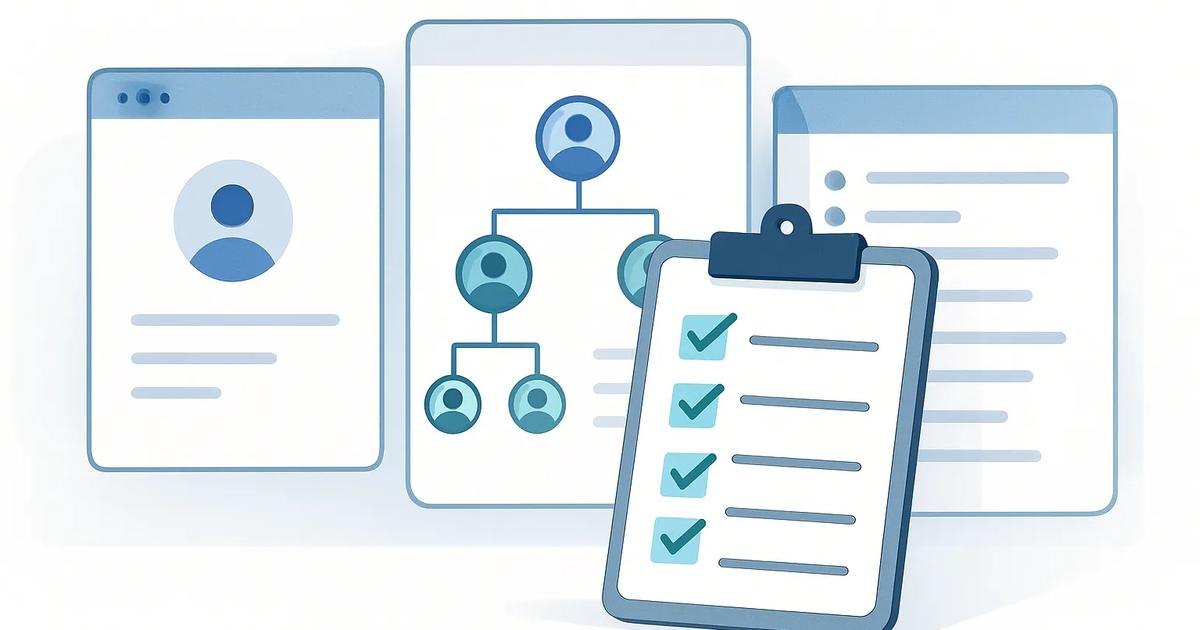
KYC, or know your customer, software helps organizations establish who a customer is and assess whether the relationship presents financial-crime, fraud or policy risk. It is used by regulated financial firms, marketplaces, crypto businesses and other services that need trustworthy onboarding. Choosing it well requires more than comparing document checks or approval rates.
A useful buying process starts with the risks, countries, customer types and regulatory obligations your business actually has. The right operating model for a US consumer lender may differ materially from that of an EU payments institution onboarding companies across several jurisdictions. Treat a KYC platform as part of a controlled decision process involving product, compliance, fraud, operations, security and engineering.
Define the scope before comparing products
“KYC software” can describe several distinct capabilities. Decide which ones are required now, which will be needed as the business expands, and which should remain with internal teams or specialist providers.
- Individual identity verification: collecting identity data, verifying government-issued documents, comparing a selfie or liveness check to a document portrait, and checking whether an identity appears credible.
- KYB, or know your business: verifying a legal entity, its registration details, ownership structure and authorized representatives. Beneficial ownership identifies the natural persons who ultimately own or control the entity.
- Sanctions and PEP screening: checking people and entities against sanctions lists and identifying politically exposed persons, or PEPs. A PEP designation is a risk factor, not evidence of wrongdoing.
- Ongoing monitoring: rescreening customers and businesses when watchlists, ownership records or risk signals change, rather than treating onboarding as a one-time event.
- Case management: routing exceptions to analysts, recording decisions, requesting additional evidence and maintaining a review history.
- Orchestration: applying rules and routing a verification step to one or more providers, often with fallback logic, without embedding every provider directly in the product.
Separate legally required controls from helpful product features. Compliance teams should document the customer due diligence standard, escalation paths and record-retention requirements. In the EU, data protection obligations under the General Data Protection Regulation, or GDPR, must also shape the design. In the US, obligations vary by sector, state and applicable anti-money-laundering rules.
Evaluate coverage and performance in context
Country coverage is meaningful only if it includes the countries, document types and customer segments you expect to serve. Ask whether the system supports passports, national identity cards, driving licences and business registries relevant to your launch markets. Check language handling, transliteration, non-Latin scripts, expired-document policy and support for edge cases such as minors, refugees or customers without a smartphone.
Do not rely on a supplier's headline accuracy rate. Test performance on your own legitimate customers and, where permitted, known fraud patterns. Measure completion rate, false rejects, false accepts, time to decision, manual-review rate and abandonment at each step. Segment the results by country, document type, device, channel and customer cohort. A system that performs well on common documents may perform poorly in the specific market driving your growth.
Assess controls, evidence and workflow
Risk rules should be configurable without allowing uncontrolled changes. Teams may need different verification paths based on geography, product, transaction risk, business type or prior account history. Ask who can alter rules, whether changes require approval, how quickly they take effect and whether prior decisions can be reproduced after a rule change.
A regulator, auditor or internal investigator should be able to understand why a customer was approved, declined or escalated. Require a durable audit trail that records data collected, checks run, list versions where relevant, risk scores, rule outcomes, analyst actions, timestamps and the reason for any override. Confirm how long evidence is retained, how it can be exported, and how legal holds or deletion requests are handled.
Review integration, data protection and cost
Evaluate APIs, software development kits, webhooks and dashboard tools against the intended customer journey. An API is an interface that lets systems exchange data. Test error handling, retry behavior, status updates, sandbox fidelity, versioning and observability. Also establish whether the vendor can support batch reviews, internal queues and the volumes expected during peaks.
Data protection should be a procurement gate, not a late legal review. Map what personal data and biometric data, if any, will be collected; where it is processed and stored; which subprocessors receive it; and how cross-border transfers are governed. Review encryption, access controls, breach notification commitments, data deletion, retention settings and independent security assurance. Data residency requirements may be decisive for some EU or public-sector use cases.
Compare total cost rather than per-check pricing alone. Include verification attempts, retries, watchlist screening, monitoring, document or registry fees, implementation, support, engineering work and human review. A lower automated-check price can be outweighed by high abandonment or a large queue of ambiguous cases.
Choose an operating model
Build versus buy
Building can make sense when a company has unusual risk logic, deep data-science capacity and enough scale to operate integrations, monitoring, security and compliance controls over time. Even then, teams commonly buy underlying data, document or screening services. Buying a platform can shorten implementation and provide established workflows, but it can also limit control over logic, evidence formats and provider choice. Assess the ongoing ownership burden, not only initial development time.
Single platform versus best of breed
A single platform can simplify contracting, integration and support. Best-of-breed services can offer stronger performance in a particular country or capability, but add supplier management and technical complexity. An orchestration layer can reduce dependency on one provider by applying consistent rules and routing traffic among services. It also creates its own critical system to secure, monitor and validate. The choice should reflect concentration risk, internal engineering capacity and the cost of switching.
Run a proof of concept on real traffic
A proof of concept should use representative, consented onboarding traffic where legally and operationally appropriate, not only vendor demos or synthetic test documents. Run it alongside the existing process or use controlled routing, with clear limits on customer impact. Predefine success criteria, a test duration, sample segments and a plan for resolving conflicting outcomes.
- Compare outcomes against a reviewed baseline, including analyst decisions and confirmed fraud or compliance events where available.
- Track conversion, decision speed, false accepts and false rejects, manual-review workload, screening alerts and operational failures.
- Test difficult scenarios: unsupported documents, poor image quality, name variations, business ownership complexity, sanctions false positives and provider outages.
- Review audit records, exports, access controls and deletion workflows with compliance, legal, security and operations teams.
- Document findings and decide whether performance is acceptable for each market and risk tier, not only as an overall average.
The final selection should be a documented risk decision. A capable KYC system supports consistent controls, but it does not replace a clear customer due diligence policy, trained reviewers or accountability for the decisions the business makes.