Behavioural Biometrics: Verifying How You Type and Swipe
Behavioural biometrics assesses the way a person interacts with a device, from typing cadence to swipe paths. It can add a quiet layer of fraud defense, but its accuracy, accessibility and privacy trade-offs need close scrutiny.
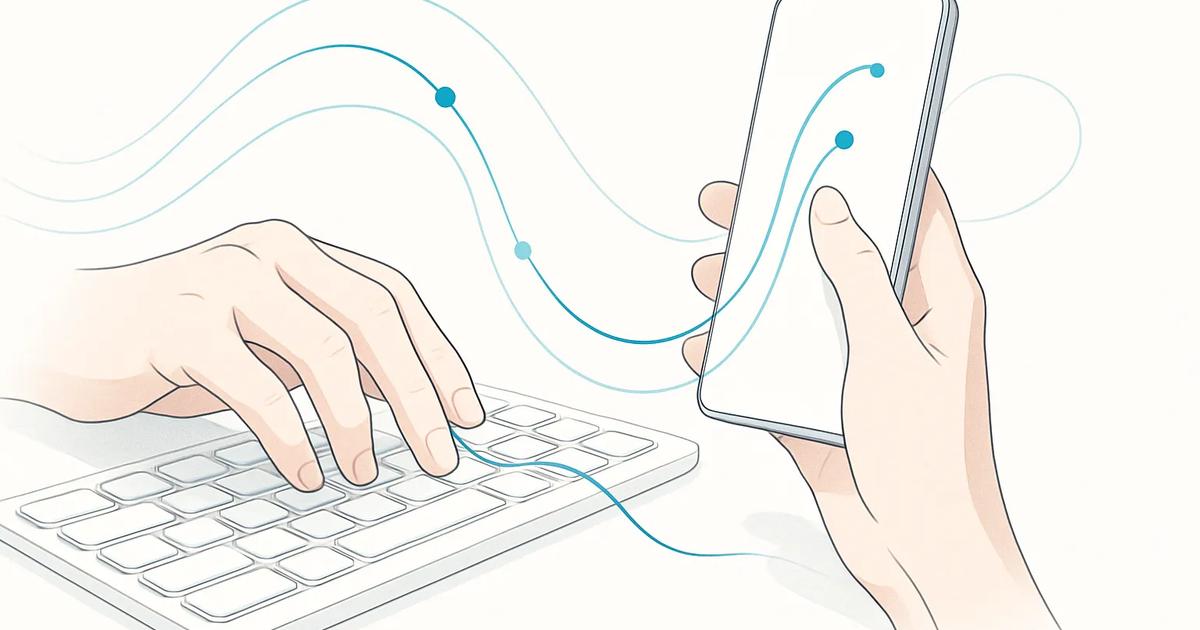
A password, passkey or one-time code can establish who is entering an account. Behavioural biometrics asks a different question: does the person using the account now behave like its legitimate user? The technology analyzes interaction patterns such as typing rhythm, touchscreen gestures and mouse movements to help identify bots, account takeover attempts and suspicious sessions.
It is increasingly used as a risk signal rather than as a standalone identity check. That distinction matters. A changed typing pattern may indicate fraud, but it can also reflect a new phone, an injury, fatigue, assistive technology or simply a user sitting at a different desk. Well-designed systems treat the result as evidence to weigh alongside other signals, not a definitive verdict about identity.
What behavioural biometrics measures
Behavioural biometrics refers to measurable patterns in how someone operates a device. Keystroke dynamics, for example, can include the time between keys, how long keys are held and the rhythm of a typed phrase. On mobile devices, systems may examine swipe speed, direction, acceleration, scrolling habits and the way a finger contacts the screen. Desktop signals can include cursor speed, pauses, click patterns and the shape of mouse movements.
The goal is usually not to record what a person writes or to identify them from one gesture. Instead, software converts interaction data into features and compares them with patterns associated with a prior session, a known user or automated traffic. Machine-learning models then generate a risk score. In practice, a service may combine that score with device information, network reputation, login history and the sensitivity of the action being attempted.
From login checks to ongoing session protection
A common use is continuous authentication, meaning that a service reassesses risk after the initial login rather than trusting the session indefinitely. This can be useful when an account begins behaving unusually, such as when a user suddenly navigates through payment or profile settings in a markedly different way. The service may then request a fresh authentication factor, limit a high-risk action or route the case for review.
The approach is also being deployed against remote-access scams. In these schemes, a fraudster persuades a victim to install remote-control software or share access, then operates the victim's banking, retail or other account. A session controlled by another person can produce different mouse or keyboard patterns from the account holder's normal use. Behavioural signals may help flag that shift, although they cannot reliably establish whether a customer has willingly handed over a device or is being coerced.
At account creation, the same broad class of techniques can support bot detection. Automated scripts often produce interaction sequences that differ from human use, including unrealistically regular timing or rapid completion of forms. These signals can supplement other anti-abuse controls, particularly where services need to limit mass sign-ups, credential stuffing or promotional fraud.
Why organizations use it
- Passive operation is its central appeal. In many deployments, users do not need to complete a new challenge or remember another secret.
- It can provide context throughout a session, including before a sensitive transfer, profile change or password reset.
- It may help reduce unnecessary challenges when other signals look uncertain but interaction patterns are consistent with the account holder.
- For bot defenses, it can make automation more costly without relying on a single easily bypassed test.
This low-friction design is particularly attractive to financial services, online marketplaces and consumer platforms, where repeated security prompts can interrupt legitimate users. But passive does not mean invisible in consequence. A risk score can lead to additional checks or blocked activity, and those outcomes need safeguards.
Limits of the signal
Behaviour changes. People type differently on a laptop and a phone, on a new keyboard, after an injury, while using a screen reader or when their motor control changes. Some users may have highly variable interaction patterns from one session to the next. Accessibility tools and alternative input devices can therefore reduce consistency or create a risk of disproportionate challenges if systems are trained around a narrow idea of typical behavior.
Models also drift over time. A user can develop new habits, change jobs, travel or replace devices; meanwhile, fraud techniques and automation tools evolve. Systems need monitoring, recalibration and a route for users to recover when an automated assessment is wrong. They also need sufficient data to establish a useful baseline. New accounts, infrequent users and short sessions may not provide enough interaction data for a confident result.
Privacy and accountability
Continuous monitoring raises a straightforward privacy question: how much observation is justified after a person has signed in? Interaction data may appear less sensitive than a fingerprint or face image, but it can still reveal persistent patterns of behavior and may be linkable across sessions or devices. Depending on implementation, data collection can also capture signals close to the content of a person's activity.
For US organizations, expectations will vary by sector and state privacy law. In the European Union, the General Data Protection Regulation requires a clear legal basis, purpose limitation, data minimization and transparency. Whether a particular behavioural-biometric deployment is treated as biometric data under applicable law can depend on how it is processed and used. That legal classification should not be the only test of responsible practice.
A proportionate approach limits collection to what is needed for a defined security purpose, separates raw event data from account identifiers where feasible, restricts retention and explains meaningful consequences to users. Human review and alternative verification paths are important when a score affects access to money, essential services or an account. Behavioural biometrics can strengthen layered security, but it works best when it remains one carefully governed signal among many.